Vision-guided Ball Catcher
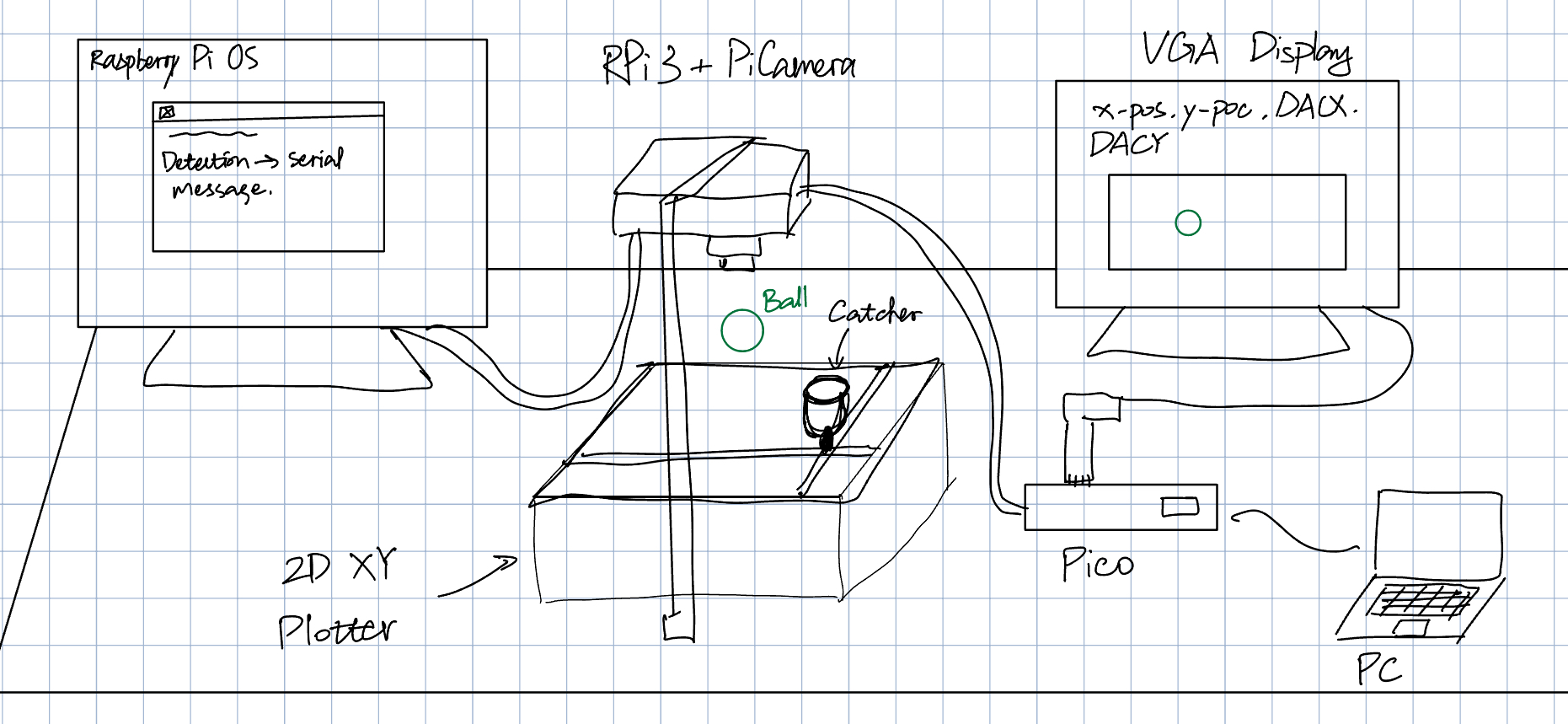
High-level sketch of the project. Real-time interaction with the physical world Vision-based sensing and perception Embedded control and responsiveness Serial communication channel Integrated hardware-software systems
- Suitable forB.Tech/B.E Embedded Systems students
- Build time4-6 weeks
- LevelIntermediate
- Available atAjvika Labs, Kakinada
About this project
Real-time interaction with the physical world
Vision-based sensing and perception
Embedded control and responsiveness
Serial communication channel
Integrated hardware-software systems
Project Overview
Vision-guided Ball Catcher is an intermediate-level Embedded Systems project designed for B.Tech/B.E students. FIG. 1. High-level sketch of the project.
Objectives
- Understand the problem statement and define clear functional requirements for the system.
- Select, interface and calibrate the required hardware modules and verify each block individually.
- Design and implement the complete solution using RP2040, C.
- Test the implementation, document the results, and prepare a working demonstration.
Software and Tools
- C
- Arduino IDE
Technology Stack
RP2040, C
Working Principle and Implementation
The system is built around RP2040 which acts as the main controller. Input modules and sensors are connected to the controller, the firmware reads and processes the data, and the results are used to drive the outputs, display information or communicate with a connected application or dashboard. Each stage — power supply, wiring, firmware upload and testing — is covered step by step so the project can be reproduced reliably.
Applications
- Academic mini/major project submission for B.Tech/B.E (Embedded Systems).
- Base platform that can be extended with additional features for real-world use.
- Hands-on practice with RP2040, C.
Learning Outcomes
- Practical understanding of RP2040, C.
- End-to-end project workflow: requirement analysis, design, implementation and testing.
- Documentation and presentation of a complete engineering project.
Project Details
- Domain: Embedded Systems
- Level: B.Tech/B.E
- Difficulty: Intermediate
- Estimated Duration: 4-6 weeks
Detailed Project Description
Vision-guided Ball Catcher applies computer vision to camera frames to detect or recognise what is in view and act on the result automatically.
How It Works
1. The camera captures frames continuously.
2. Frames are pre-processed and fed to the detection/recognition model.
3. Detections are drawn on the output and used to trigger the required action (log, alert, unlock, count).
4. Results and images are stored or streamed to a browser/dashboard.
Key Components and Their Role
- RP2040: dual-core Cortex-M0+ microcontroller with programmable I/O used for precise, low-level timing.
Implementation Steps
1. Collect the components and study each module's datasheet (pin-out, voltage, interface).
2. Wire the circuit on a breadboard following the pin mapping; power sensors from the correct rail (3.3 V / 5 V).
3. Install C, Arduino IDE and the required libraries; flash a minimal test sketch for each module separately.
4. Write the main firmware: read sensors → process → drive outputs / send data.
5. Configure network or cloud credentials and test communication end-to-end.
6. Calibrate thresholds, add error handling (reconnect, sensor time-out) and run a long-duration test.
7. Finalise on a PCB / enclosure and document wiring, code and results.
Key Features
- Real-time detection
- Annotated output
- Event logging
- Adjustable confidence threshold
Expected Output
On completion the student will have a live video/image feed with detected objects highlighted and the corresponding actions logged.
Deliverables
- Complete source code with comments
- Circuit diagram and pin mapping
- Project report with screenshots and results
- Demonstration-ready build
Technologies used
Software & tools
- C
- Arduino IDE
Project demo video
What you get
- Working project / hardware kit, tested before delivery
- Complete source code with explanation
- Project demo and guidance for your viva
- Project report, PPT and IEEE paper support (on request)
Related Embedded Systems projects

Gas Leakage Detector Using Arduino
A budget-friendly LPG gas leak detector built with an Arduino and MQ-5 gas sensor, triggering a buzzer and LED when unsafe gas levels are de...
View project
Simple Alarm System
A beginner-friendly home alarm with PIR motion sensing, keypad PIN entry, and separate entry/exit timing delays, built to be easy to expand.
View project
Ultrasonic Sensor Project with Arduino UNO Q
A beginner-friendly first Arduino UNO Q project: a servo-swept ultrasonic sensor that renders a live sweeping radar display in a web browser...
View project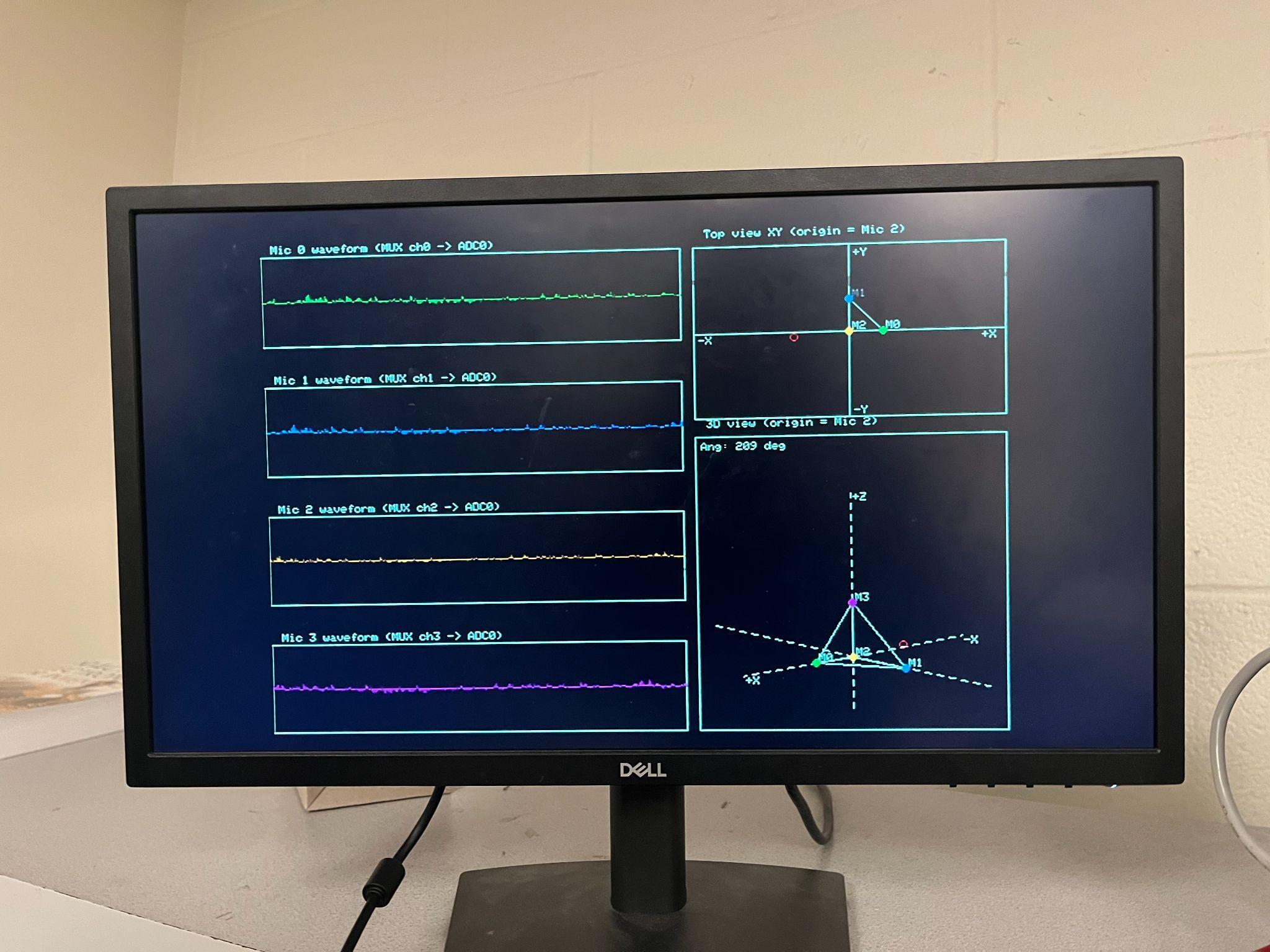
3D Audio Localization
[Fall 2025] We designed a real-time embedded system that localizes sound sources in three dimensions and visualizes them live using a four-m...
View project