
Gesture-controlled kitchen utensil carosel
[Fall 2023] Contactless automated kitchen utensil carousel to reduce foodcross-contamenation while cooking.
- Suitable forB.Tech/B.E Embedded Systems students
- Build time4-6 weeks
- LevelBeginner
- Available atAjvika Labs, Kakinada
About this project
Overview
Hardware
Code
Weekly Progress
Performance
Appendix
Final Project Overview
Gesture-Controlled Automated Kitchen Utensil Carousel
Project Introduction
Contactless automated kitchen utensil carousel to reduce food
cross-contamenation while cooking.
Project Summary
The motorized kitchen utensil carousel is a convenient countertop kitchen appliance designed to store and make utensils more accessible to the user.
Its primary structure is reminiscent of a lazy susan, but with motorization for controlled rotation.
It features two ways for users to control the rotation of the carousel.
One way is through the use of hand gestures that indicate to the controller whether to rotate left or right.
The second way is through a wireless controller that has buttons that indicate whether to rotate left or right.
Frequently, while cooking, individuals find themselves in the situation of having to retrieve a particular kitchen tool from a drawer or holder.
However, they prefer not to sort through kitchen tools while they are attending to food on the stove and their hands are dirty.
This is especially an issue with food safety while handling meat as a lot of cross contamination can occur.
Those who have motor disabilities, have even more difficulty with this aspect of cooking.
Our project creates a hassle free cooking experience, by making kitchen tools more accessible on the go through its rotation feature controlled by a simple wireless controller.
The LED also indicates to the user when it is safe to grab their tool.
Students
Steven Lambert (SAL267)
Shota Yamamoto (SMY48)
Course Site
ECE 4760
© Above Site All right reserved. Adapted From Template By
WebThemez
Detailed Project Description
Gesture-controlled kitchen utensil carosel is an embedded-systems build that integrates sensors, actuators, a microcontroller and firmware into one working device, with the design decisions and test results documented so it can be reproduced.
How It Works
1. Input devices (sensors, buttons, encoders, wireless links) are connected to the microcontroller.
2. Firmware samples the inputs at a fixed rate and runs the control/processing logic (often with interrupts, timers or PIO for precise timing).
3. Outputs (motors, LEDs, displays, audio, radio) are driven according to the result.
4. The system is tested against its specification and tuned for reliability and responsiveness.
Key Components and Their Role
- RP2040: dual-core Cortex-M0+ microcontroller with programmable I/O used for precise, low-level timing.
- Bluetooth Low Energy: short-range low-power wireless link to a phone or browser.
Implementation Steps
1. Collect the components and study each module's datasheet (pin-out, voltage, interface).
2. Wire the circuit on a breadboard following the pin mapping; power sensors from the correct rail (3.3 V / 5 V).
3. Install C, Arduino IDE and the required libraries; flash a minimal test sketch for each module separately.
4. Write the main firmware: read sensors → process → drive outputs / send data.
5. Configure network or cloud credentials and test communication end-to-end.
6. Calibrate thresholds, add error handling (reconnect, sensor time-out) and run a long-duration test.
7. Finalise on a PCB / enclosure and document wiring, code and results.
Key Features
- Real-time firmware
- Custom hardware integration
- Measured performance
- Documented design and trade-offs
Expected Output
On completion the student will have a demonstrable device that meets its functional specification, with wiring diagram, code and results.
Deliverables
- Complete source code with comments
- Circuit diagram and pin mapping
- Project report with screenshots and results
- Demonstration-ready build
Technologies used
Software & tools
- C
- Arduino IDE
Project demo video
What you get
- Working project / hardware kit, tested before delivery
- Complete source code with explanation
- Project demo and guidance for your viva
- Project report, PPT and IEEE paper support (on request)
Delivery & Payment
Delivery takes a minimum of two weeks from the date your inquiry is confirmed.
Payment is in two parts:
• 50% advance to start the project
• Remaining 50% before delivery
Note:
• Documentation and PPT are not included by default
• If you need documentation/PPT, it can be arranged for extra time and cost
We'll confirm the exact timeline and cost with you after reviewing your requirements.
Related Embedded Systems projects
Embedded Systems
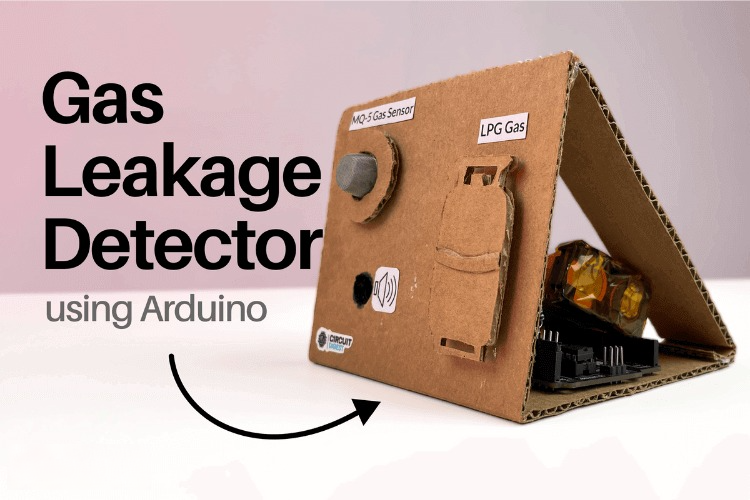
Gas Leakage Detector Using Arduino
A budget-friendly LPG gas leak detector built with an Arduino and MQ-5 gas sensor, triggering a buzzer and LED when unsafe gas levels are de...
View project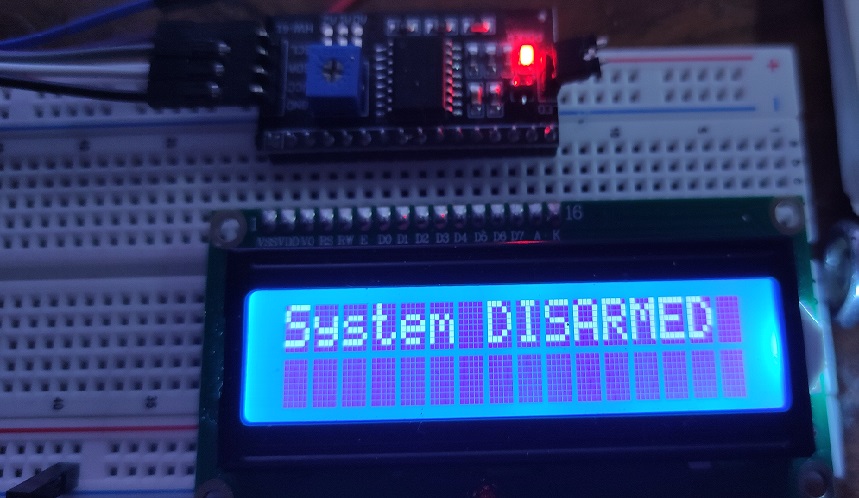
Embedded Systems
Simple Alarm System
A beginner-friendly home alarm with PIR motion sensing, keypad PIN entry, and separate entry/exit timing delays, built to be easy to expand.
View project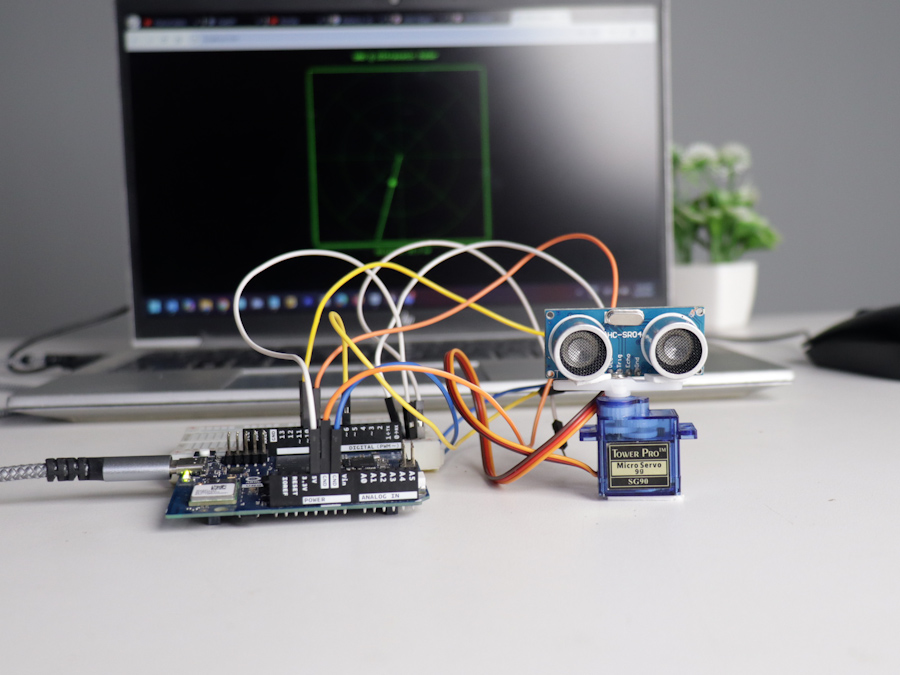
Embedded Systems
Ultrasonic Sensor Project with Arduino UNO Q
A beginner-friendly first Arduino UNO Q project: a servo-swept ultrasonic sensor that renders a live sweeping radar display in a web browser...
View project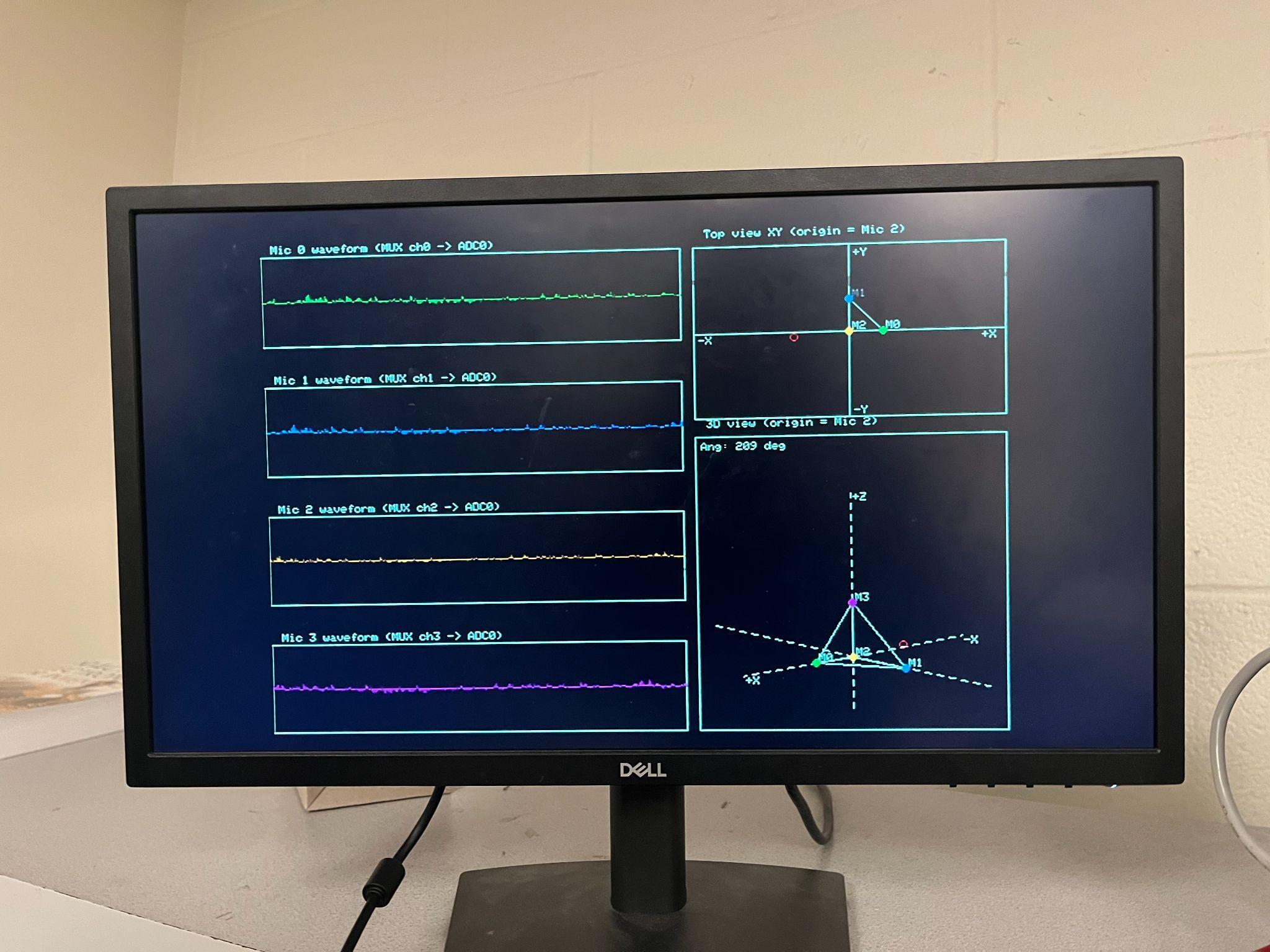
Embedded Systems
3D Audio Localization
[Fall 2025] We designed a real-time embedded system that localizes sound sources in three dimensions and visualizes them live using a four-m...
View project