Stepper Motor Driver For Cars
The car motor driver gives control, reduces interference, and protects from heat. It works for headlights, air systems, screens, and valves.
- Suitable forB.Tech ECE students
- Build time3-4 weeks
- LevelBeginner
- Available atAjvika Labs, Kakinada
About this project
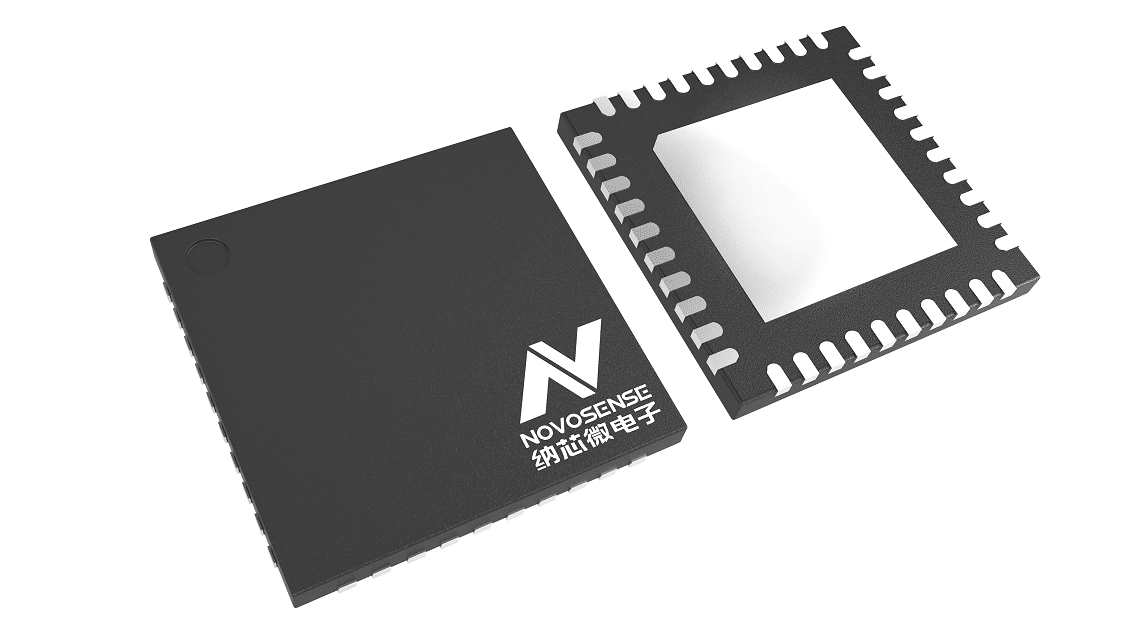
The car motor driver gives control, reduces interference, and protects from heat. It works for headlights, air systems, screens, and valves. NOVOSENSE Microelectronics has announced the release of the NSD8381-Q1 is an automotive-grade, highly integrated bipolar stepper motor driver designed for precision and reliability in demanding vehicle applications. It supports up to 1/32 programmable microstepping, configurable decay modes, and includes a built-in ADC, spread-spectrum PWM for EMI reduction, sensorless stall detection, SPI interface, and thermal protection features such as over-temperature warning and shutdown. The NSD8381-Q1 is suited for a range of automotive applications, including HVAC climate flap motors, electronic expansion valves (EXVs) and multi-port valves, headlight step control systems such as Adaptive Driving Beam (ADB) and Adaptive Front-lighting System (AFS), as well as Head-Up Display (HUD) position adjustment motors. Engineered specifically for automotive systems, the NSD8381-Q1 delivers outstanding performance and stability in applications like headlight leveling, HUD position adjustment, HVAC electronic expansion valves, and air flap motor control. Key features include wide operating voltage from 4.5V to 36V with absolute max rating 40V, current up to 1.35A, programmable micro-stepping up to 1/32 micro-stepping mode, four programmable decay modes including Slow Decay, Mixed Decay, Auto Decay 1 and Auto Decay 2, IO direct control of clock direction hold or direct half-bridge control, support PWM frequency spread spectrum for EMC performance optimization, support slew rate and dead time configuration, 24-bit 4MHz SPI communication. With the growing number of electronic control units in modern vehicles, ensuring reliable and resilient in-vehicle communication is more critical than ever.
Detailed Project Description
Stepper Motor Driver For Cars is a technology insight article that explains a recent industry development, the engineering behind it and what it means for students and practitioners in the field.
How It Works
1. The development is introduced with the companies, products or research groups involved.
2. The underlying technology (materials, architecture, process or algorithm) is explained in plain terms.
3. Its advantages over the existing approach are compared using the published specifications.
4. The impact on the industry and on future projects is discussed.
Key Components and Their Role
- Stepper motor: precise step-driven motor used for accurate positioning.
Implementation Steps
1. Read the primary announcement and the technical specifications.
2. Identify the core technology and how it differs from the previous generation.
3. Relate it to the fundamentals studied in the curriculum (materials, power electronics, architecture).
4. Note how a similar idea could be prototyped at student scale.
Key Features
- Industry context
- Technical explanation
- Comparison with existing solutions
- Future outlook
Expected Output
On completion the student will have a clear understanding of the technology, its benefits and how it can inspire or inform a related student project.
Deliverables
- Technology summary notes
- Comparison with existing approaches
- Ideas for a related student project
Technologies used
Project demo video
What you get
- Working project / hardware kit, tested before delivery
- Complete source code with explanation
- Project demo and guidance for your viva
- Project report, PPT and IEEE paper support (on request)
Delivery & Payment
Delivery takes a minimum of two weeks from the date your inquiry is confirmed.
Payment is in two parts:
• 50% advance to start the project
• Remaining 50% before delivery
Note:
• Documentation and PPT are not included by default
• If you need documentation/PPT, it can be arranged for extra time and cost
We'll confirm the exact timeline and cost with you after reviewing your requirements.
Related ECE projects
ECE
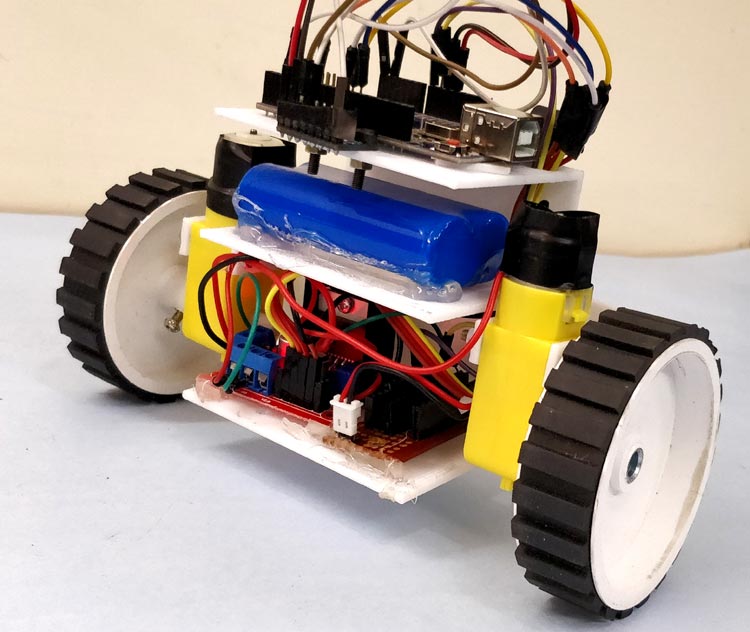
DIY Self Balancing Robot using Arduino
In this tutorial I will document my experience in building the self balancing robot. You might be an absolute beginner who is just getting s...
View project
ECE
Sustainable Battery Material For Electric Cars
Researchers have created eco-friendly batteries for EVs, matching cobalt-based batteries in cost-effectiveness with potential for lithium re...
View project
ECE
BorgWarner To Integrate STMicroelectronics SiC Technology In Viper Power Module For Volvo Cars Next-Generation EVs
STMicroelectronics will supply BorgWarner Inc. with the latest third generation 750V silicon carbide SiC power MOSFETs dice for their propri...
View project
ECE
Longer-Lasting Chips For Smartphones
New chips help users run apps faster, keep devices working longer, and handle more tasks on smartphones, computers, and cars.
View project