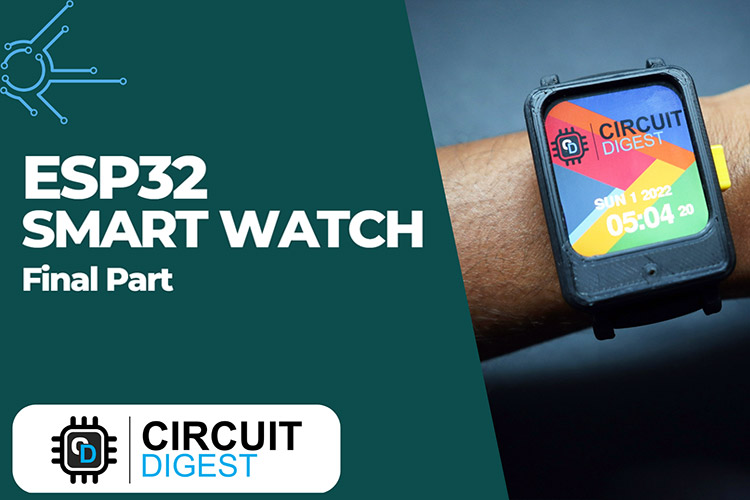

DIY Smartwatch with multiple Watch Faces, Heart Rate Sensor, Compass and Games
In this project, you will be guided through the process of assembling the hardware components, setting up the software, and configuring the settings and features of your smartwatch.
- Suitable forB.Tech IoT students
- Build time3-4 weeks
- LevelIntermediate
- Available atAjvika Labs, Kakinada
About this project
We are calling this the 'Final Part' because we previously built 3 parts where we continuously added new features and sensors to make it the perfect Smart Watch.
Designing a Smart watch using ESP32 – Part 1 Making Watch Faces
Designing a Smartwatch using ESP32 Part 2 - Ambient Light and Heart Rate Sensors
Designing a Smartwatch using ESP32 Part 3 - Magnetometer and Gyroscope
This complete project was made possible by the compact PCB boards provided by PCBWAY. In this project we will also show you how you can place your order with them, to get your PCB boards delivered to your doorstep.
ESP32 Smartwatch Features
1.69” IPS TFT Display with a resolution of 280x240 pixels
1.69” IPS TFT Display with a resolution of 280x240 pixels
Single button control
Single button control
Deep Sleep power saving Mode
Deep Sleep power saving Mode
Auto wakeup with accelerometer
Auto wakeup with accelerometer
Auto brightness adjust using ambient light sensor
Auto brightness adjust using ambient light sensor
Digital compass for navigation
Digital compass for navigation
Multiple cool looking watch faces
Multiple cool looking watch faces
Intuitive menu system
Intuitive menu system
Inbuilt game for entertainment
Inbuilt game for entertainment
Battery charging capability with deep discharge protection
Battery charging capability with deep discharge protection
Components Required to Build the ESP32 Smart Watch
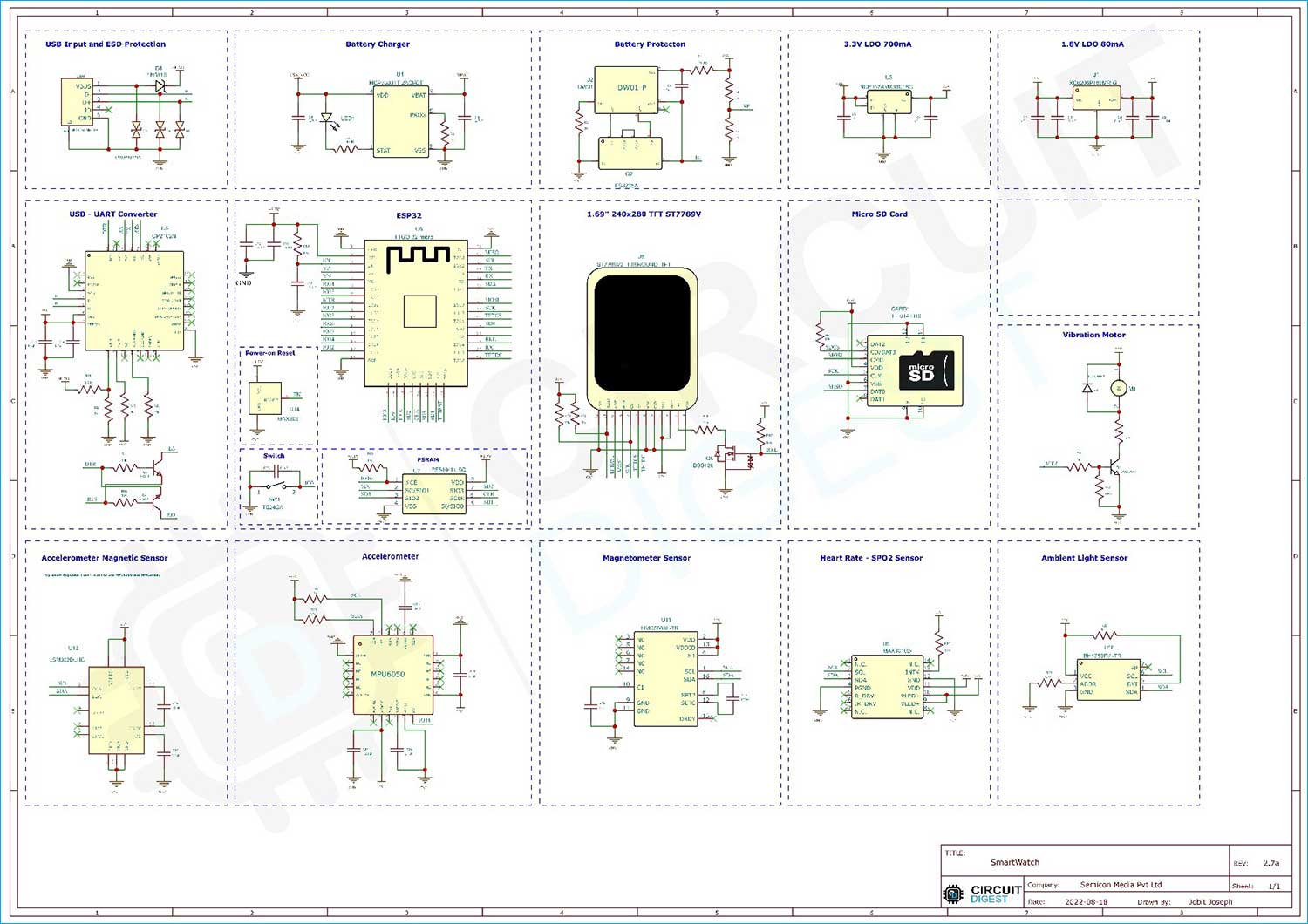
All the parts you will require to build the smartwatch are listed below. The exact value of each component can be found in the schematics or the BOM.
TTGO Micro-32 V2.0 x1
TTGO Micro-32 V2.0 x1
IPS6404L PSRAM IC x1
IPS6404L PSRAM IC x1
1.69” TFT display with ST7789V controller x1
1.69” TFT display with ST7789V controller x1
MAX809T 3V Power supervisor Reset controller x1
MAX809T 3V Power supervisor Reset controller x1
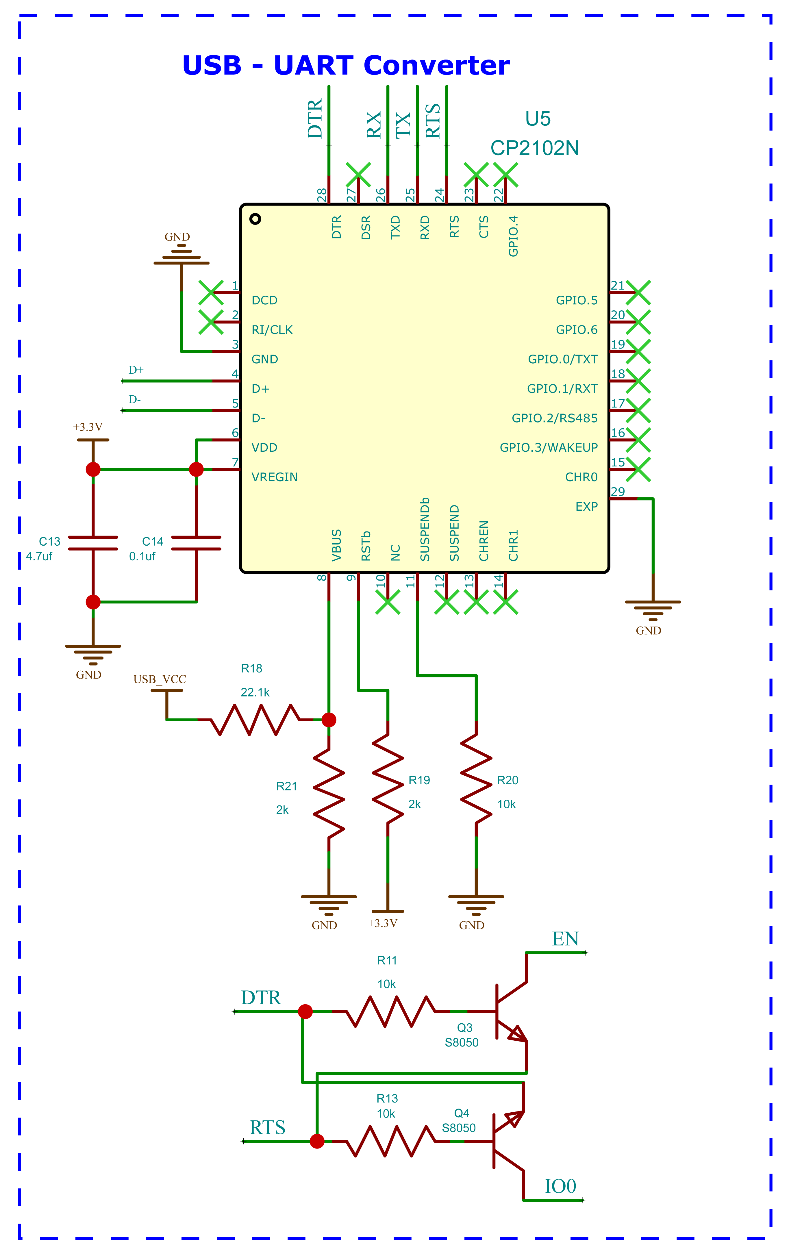
CP2102 USB UART controller x1
CP2102 USB UART controller x1
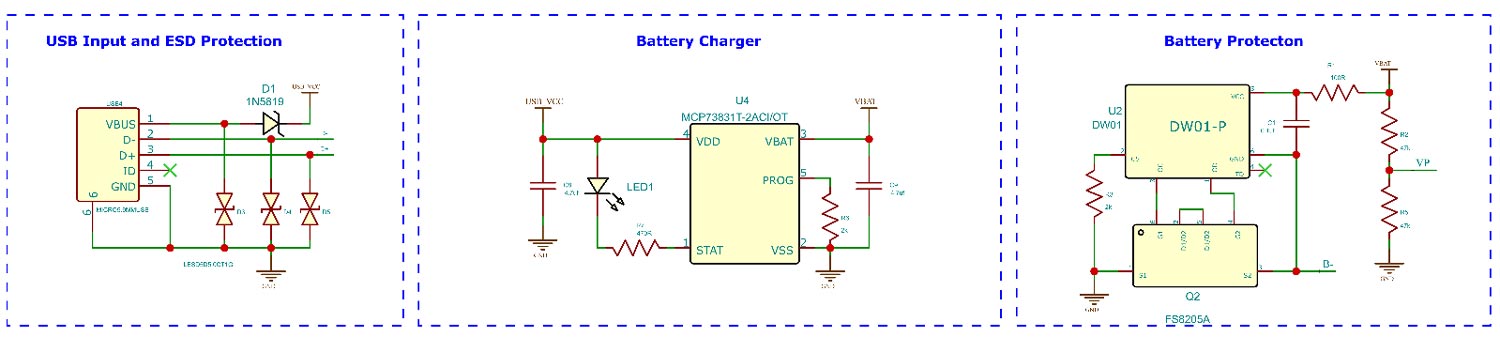
MCP7383 1S battery charger x1
MCP7383 1S battery charger x1
DW01 Battery protection IC x1
DW01 Battery protection IC x1
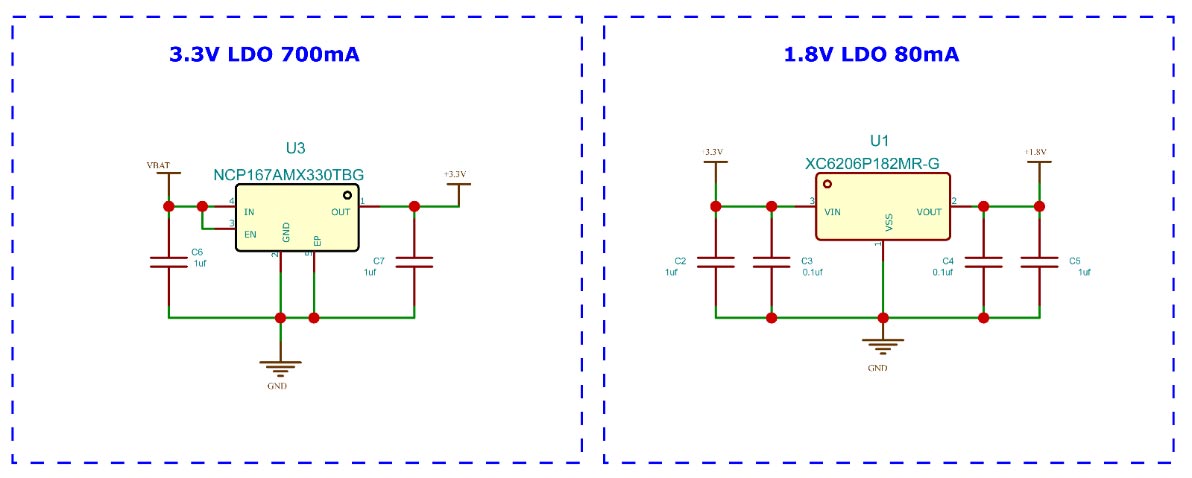
NCP167AMX330TBG 3.3V LDO x1
NCP167AMX330TBG 3.3V LDO x1
XC6202P182MR 1.8V LDO x1
XC6202P182MR 1.8V LDO x1
MPU6050 Accelerometer IC x1
MPU6050 Accelerometer IC x1
HMC5883L Magnetometer Sensor IC x1
HMC5883L Magnetometer Sensor IC x1
LSM303DLHC Accelerometer Magnetometer IC (Optional, replaces MPU6050 and HMC5883L) x1
LSM303DLHC Accelerometer Magnetometer IC (Optional, replaces MPU6050 and HMC5883L) x1
MAX30102 Hear Rate sensor x1
MAX30102 Hear Rate sensor x1
BH1750FVI Ambient light sensor x1
BH1750FVI Ambient light sensor x1
S8050 SOT-23 NPN transistor x3
S8050 SOT-23 NPN transistor x3
10mm Vibration Motor x1
Technologies used
Hardware components
- ESP32
- ESP8266
- Arduino
- DHT22
- Relay
- OLED
- NodeMCU
Software & tools
- Arduino IDE
- Blynk
- Firebase Console
- Node-RED
- MQTT Broker
Project demo video
What you get
- Working project / hardware kit, tested before delivery
- Complete source code with explanation
- Project demo and guidance for your viva
- Project report, PPT and IEEE paper support (on request)
Related IoT projects

DIY IoT Plant Watering System using Arduino
A remote plant-watering system that monitors soil moisture and lets you trigger a water pump from anywhere through the Blynk app, with LED-m...
View project
Build a smart mirror with an Arduino UNO Q
A wall-mounted smart mirror that shows the time, calendar, to-do list, room temperature/humidity and weather forecast behind a two-way glass...
View project
ESP32 Patient Health Monitor ECG SpO2 BPM Live Dashboard
Build a complete patient health monitoring system using ESP32 with AD8232 ECG sensor, MAX30102 pulse oximeter, BME280 and live web dashboard...
View project
IoT AC Energy Meter with PZEM-004T and ESP32 WebServer
Build an IoT-based AC energy meter using ESP32 and PZEM-004T to measure voltage, current, power, frequency and energy with live web dashboar...
View project