
IoT AC Energy Meter with PZEM-004T and ESP32 WebServer
Build an IoT-based AC energy meter using ESP32 and PZEM-004T to measure voltage, current, power, frequency and energy with live web dashboard.
- Suitable forB.Tech IoT students
- Build time4-6 weeks
- LevelAdvanced
- Available atAjvika Labs, Kakinada
About this project
IoT energy monitoring using PZEM-004T v3.0 module with ESP32 measures AC parameters: voltage (80-260V AC), current (0-100A), active power, energy (kWh), frequency, and power factor. PZEM-004T communicates via UART (GPIO16=RX2, GPIO17=TX2). ESP32 hosts web dashboard with live readings, daily kWh trend chart via Chart.js, cost calculator with configurable tariff, and alerts. Data published to Thingspeak for cloud logging. Safety: Never open CT with load connected. Libraries: PZEM-004Tv30, WiFi, ESPAsyncWebServer, AsyncTCP, Thingspeak, ArduinoJson.
Project Overview
IoT AC Energy Meter with PZEM-004T and ESP32 WebServer is an advanced-level IoT project designed for B.Tech students. Build an IoT-based AC energy meter using ESP32 and PZEM-004T to measure voltage, current, power, frequency and energy with live web dashboard.
Objectives
- Understand the problem statement and define clear functional requirements for the system.
- Select, interface and calibrate the required hardware modules and verify each block individually.
- Design and implement the complete solution using ESP32, Arduino IDE, C++, WiFi.
- Test the implementation, document the results, and prepare a working demonstration.
Hardware Components
- ESP32 DevKit
- PZEM-004T v3.0 Energy Meter
- Current Transformer 100A
- OLED Display
- Power Supply 5V
Software and Tools
- Arduino IDE
- PZEM-004Tv30 Library
- ThingSpeak
- ESPAsyncWebServer
Technology Stack
ESP32, Arduino IDE, C++, WiFi, UART, WebServer, ThingSpeak
Working Principle and Implementation
The system is built around ESP32 DevKit which acts as the main controller. Input modules and sensors are connected to the controller, the firmware reads and processes the data, and the results are used to drive the outputs, display information or communicate with a connected application or dashboard. Each stage — power supply, wiring, firmware upload and testing — is covered step by step so the project can be reproduced reliably.
Applications
- Academic mini/major project submission for B.Tech (IoT).
- Base platform that can be extended with additional features for real-world use.
- Hands-on practice with ESP32, Arduino IDE, C++.
Learning Outcomes
- Practical understanding of ESP32, Arduino IDE, C++.
- End-to-end project workflow: requirement analysis, design, implementation and testing.
- Documentation and presentation of a complete engineering project.
Project Details
- Domain: IoT
- Level: B.Tech
- Difficulty: Advanced
- Estimated Duration: 4-6 weeks
Technologies used
Hardware components
- ESP32 DevKit
- PZEM-004T v3.0 Energy Meter
- Current Transformer 100A
- OLED Display
- Power Supply 5V
Software & tools
- Arduino IDE
- PZEM-004Tv30 Library
- ThingSpeak
- ESPAsyncWebServer
What you get
- Working project / hardware kit, tested before delivery
- Complete source code with explanation
- Project demo and guidance for your viva
- Project report, PPT and IEEE paper support (on request)
Delivery & Payment
Delivery takes a minimum of two weeks from the date your inquiry is confirmed.
Payment is in two parts:
• 50% advance to start the project
• Remaining 50% before delivery
Note:
• Documentation and PPT are not included by default
• If you need documentation/PPT, it can be arranged for extra time and cost
We'll confirm the exact timeline and cost with you after reviewing your requirements.
Related IoT projects

IoT
DIY IoT Plant Watering System using Arduino
A remote plant-watering system that monitors soil moisture and lets you trigger a water pump from anywhere through the Blynk app, with LED-m...
View project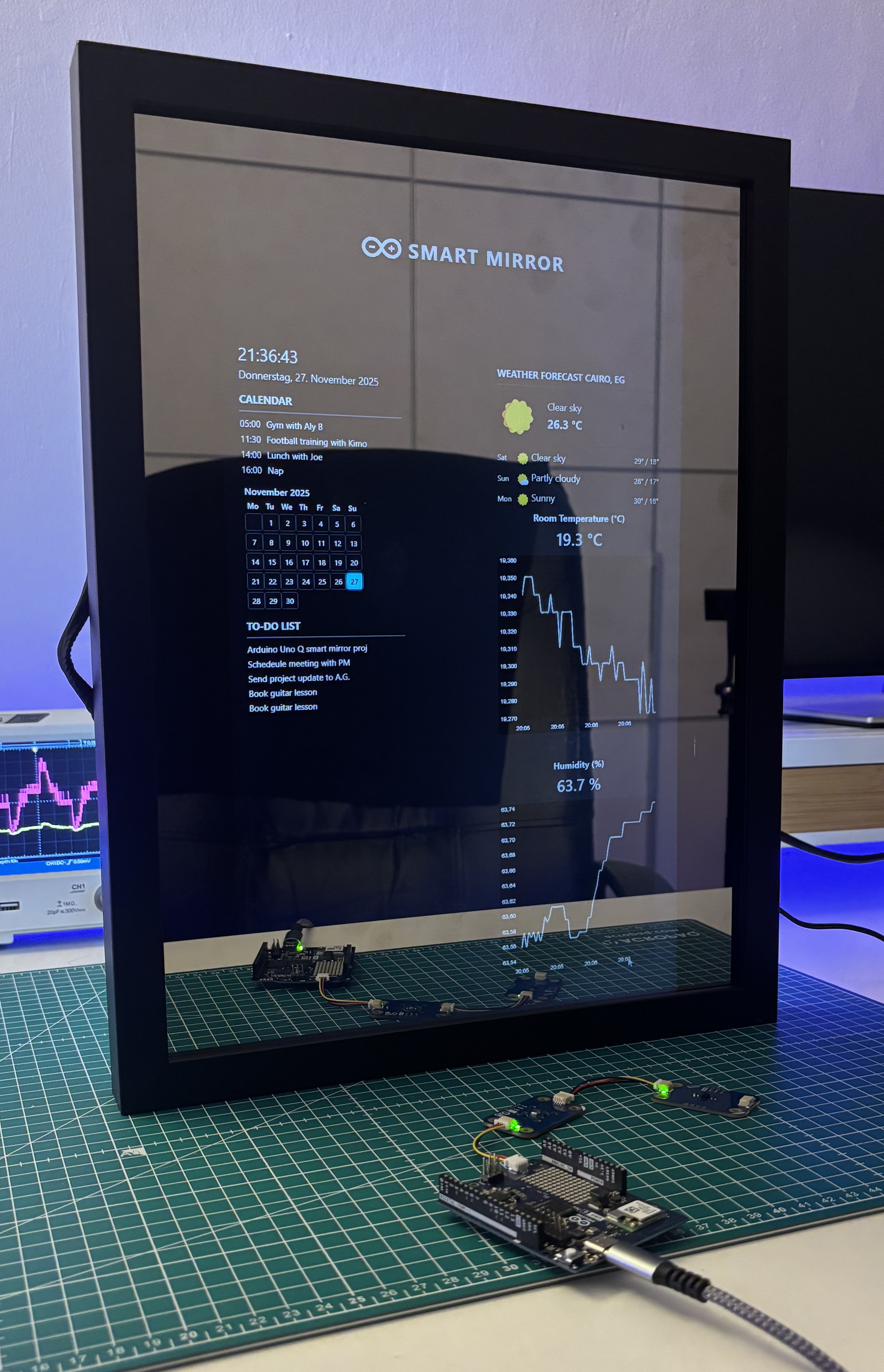
IoT
Build a smart mirror with an Arduino UNO Q
A wall-mounted smart mirror that shows the time, calendar, to-do list, room temperature/humidity and weather forecast behind a two-way glass...
View project
IoT
ESP32 Patient Health Monitor ECG SpO2 BPM Live Dashboard
Build a complete patient health monitoring system using ESP32 with AD8232 ECG sensor, MAX30102 pulse oximeter, BME280 and live web dashboard...
View project
IoT
Home Automation using ESP32 and Blynk 2.0 with Real-Time Feedback
Control 4 AC appliances with ESP32 and Blynk 2.0 app from anywhere in the world with real-time physical switch feedback.
View project