

Crafting Melodies with Arduino Tone() Function and ChatGPT's Collaborative Symphony
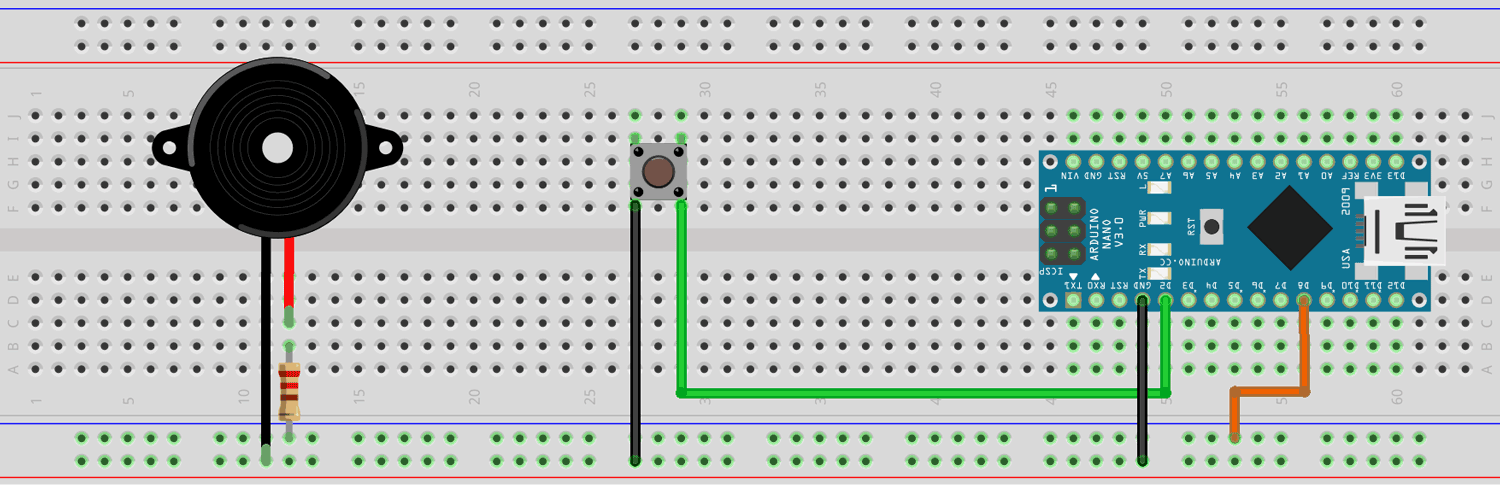
In this project, We'll be teaming up with ChatGPT to craft captivating melodies for various songs. For this, we will integrating the Arduino tone function with a piezo buzzer
- Suitable forB.Tech AI students
- Build time4-6 weeks
- LevelAdvanced
- Available atAjvika Labs, Kakinada
About this project
Hey there, music lovers! We've got something exciting to share with you! We've already embarked on a fascinating project featuring the piezo buzzers and Arduino tone() Function, where we learned to Play Melody on Piezo Buzzer or Speaker using the Arduino tone () function. Now, we're taking it a step further by experimenting with these enchanting devices to compose unique tones for different songs! Explore a list of hands-on AI projects and tutorials featuring practical builds and guides to help beginners and makers learn real-world artificial intelligence applications.
Here's the plan: We'll be teaming up with ChatGPT to craft captivating melodies for various songs. As we're familiar with ChatGPT and its incredible abilities, let's now explore the possibilities of taking it even further. By integrating the Arduino tone function with a piezo buzzer, we'll unlock new realms of creativity with this simple yet powerful combination.
Firstly, we will test if ChatGPT can comprehend the code from our project. Once confirmed, we will then request it to generate codes for other songs, expanding the range of melodies we can create.
Great! ChatGPT has proven its ability to understand the code exceptionally well. Now, we're thrilled to put its talents to the test and ask it to generate the code for the timeless classic \" Happy Birthday \" song.
Now, we will upload the code and put ChatGPT to the test to see just how proficient it is.
Although it was a close attempt, it didn't quite hit the mark of what we wanted to hear. So, let's give it another shot! How about trying \" Jingle Bells \" this time? We're excited to see what melodic wonders ChatGPT can come up with for this classic tune!
Let’s try the same for another classic song “ Twinkle Twinkle Little Star ”
Absolutely! Once we confirm that ChatGPT comprehends the code from our project, we'll proceed to ask it for codes to play more famous songs. And to take it up a notch, we'll even try our hand at a more complex song, such as \" Bloody Mary \" from Wednesday Addams.
It is evident that the code generated by ChatGPT for \"Bloody Mary\" from Wednesday Addams is nowhere close to the original. While the intention behind using AI tools like ChatGPT is to simplify tasks and foster creativity, it's important to acknowledge their limitations.
Indeed, relying entirely on AI-generated code can be risky. Although ChatGPT demonstrates impressive capabilities, it is not perfect and can produce incorrect or unintended results, even with a high level of confidence. Depending on the context, this could lead to unwanted consequences, especially when dealing with critical applications or sensitive tasks.
Our exploration of combining ChatGPT with the Arduino tone() function for music composition has been an exciting journey. While we have witnessed ChatGPT's comprehension of code and its potential for generating melodies, it is important to acknowledge the limitations and the need for human expertise in ensuring accuracy. By embracing the synergy between technology and creativity, we can continue to push the boundaries of musical expression, forging a path where AI tools enhance our artistic endeavors while respecting the irreplaceable role of human ingenuity and judgment.
Technologies used
Hardware components
- Raspberry Pi
- USB Camera
- Pi Camera
- Jetson Nano
Software & tools
- Python
- TensorFlow
- OpenCV
- Jupyter Notebook
- Google Colab
Project demo video
What you get
- Working project / hardware kit, tested before delivery
- Complete source code with explanation
- Project demo and guidance for your viva
- Project report, PPT and IEEE paper support (on request)
Delivery & Payment
Delivery takes a minimum of two weeks from the date your inquiry is confirmed.
Payment is in two parts:
• 50% advance to start the project
• Remaining 50% before delivery
Note:
• Documentation and PPT are not included by default
• If you need documentation/PPT, it can be arranged for extra time and cost
We'll confirm the exact timeline and cost with you after reviewing your requirements.
Related AI projects

AI
ESP32 CAM Object Detection using Edge Impulse TinyML
Deploy a custom TinyML object detection model trained on Edge Impulse on ESP32-CAM to identify objects like vegetables, gestures or products...
View project
AI
ESP32 Real-Time Face Recognition Attendance System
Build a face recognition attendance system using ESP32-CAM that automatically logs attendance with timestamp to Firebase when a registered f...
View project
AI
C++ Programming Language
C++ Programming Language — a beginner AI project built with HTML5, CSS3, JavaScript, complete with design details, implementation steps and...
View project
AI
How to use ESP32 Camera Module for Video Streaming and Face Recognition
In this project, we are going to build a Face Recognition System using ESP32-CAM which will also work as an ESP32-CAM Security system by rec...
View project