


Build DIY Smart Curtains using ESP32 and LDR Sensors
In this article, we have build smart curtains using ESP32 and LDR sensors. This would be used to draw the curtains or window panels and you can control your room lighting according to need.
- Suitable forB.Tech IoT students
- Build time3-4 weeks
- LevelIntermediate
- Available atAjvika Labs, Kakinada
About this project
Component Required for Smart Curtains
Project Used Hardware
Common hardware tools
Project Used Software
Project Hardware Software Selection
ESP32 is just the right hardware to go for. Considering its price, it offers some serious advantages over any other IoT board in the market. For demo purposes, I've used Servo in place of Stepper Motor. Two LDR are used as feedback for the system to act accordingly. Users can control the percentage of light entering from any part of the world at a comfort. Different users have different preferences, so gives customization. Programming ESP32 using the Arduino platform is a breeze, it's open-source and already has a wide user base. At any point in time if you're stuck you can just search it online. For DIY projects, open-source is the way to go.
Smart Curtains Circuit Diagram
The circuit is very simple. Any kid will also be able to make it. You just need basic breadboard skills. Connect wires as per circuit shown. I've connected the servo to pin 13. Indoor LDR to pin 34, since it's an analog pin. Outdoor LDR to pin 35 since it's also an analog pin. Just these basic wiring will get up and running. Very easy. Make a voltage divider using LDR and 10kOhm resistor. This voltage divider will give different output voltages for different lighting exposed. Make the voltage divider by referring to the circuit. Connect all ground wires together and connect it to the power supply. Same for power line also.
Complete Project Code
Technologies used
Hardware components
- ESP32
- ESP8266
- Arduino
- DHT22
- Relay
- OLED
- NodeMCU
Software & tools
- Arduino IDE
- Blynk
- Firebase Console
- Node-RED
- MQTT Broker
Project demo video
What you get
- Working project / hardware kit, tested before delivery
- Complete source code with explanation
- Project demo and guidance for your viva
- Project report, PPT and IEEE paper support (on request)
Related IoT projects

DIY IoT Plant Watering System using Arduino
A remote plant-watering system that monitors soil moisture and lets you trigger a water pump from anywhere through the Blynk app, with LED-m...
View project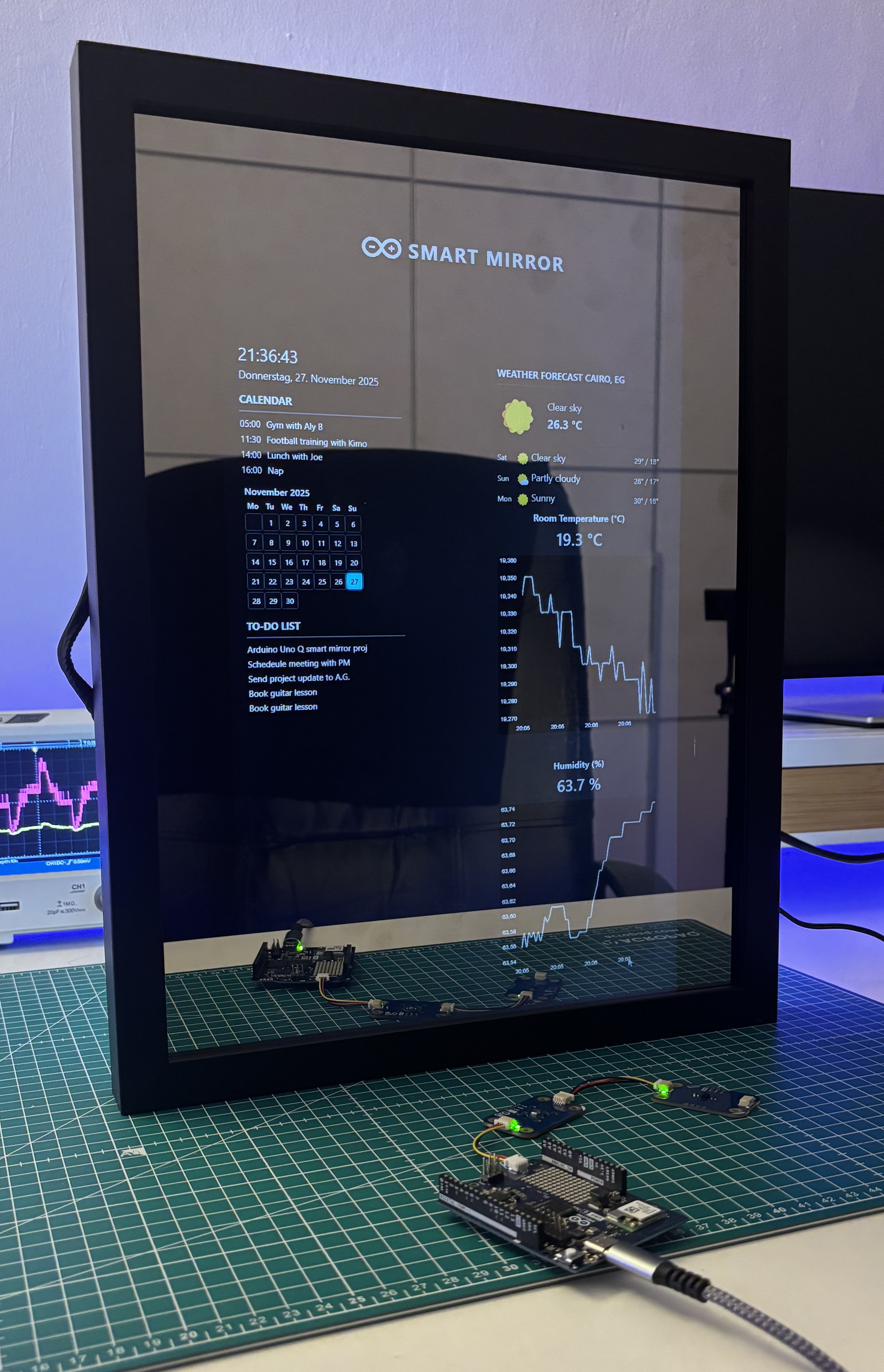
Build a smart mirror with an Arduino UNO Q
A wall-mounted smart mirror that shows the time, calendar, to-do list, room temperature/humidity and weather forecast behind a two-way glass...
View project
ESP32 Patient Health Monitor ECG SpO2 BPM Live Dashboard
Build a complete patient health monitoring system using ESP32 with AD8232 ECG sensor, MAX30102 pulse oximeter, BME280 and live web dashboard...
View project
IoT AC Energy Meter with PZEM-004T and ESP32 WebServer
Build an IoT-based AC energy meter using ESP32 and PZEM-004T to measure voltage, current, power, frequency and energy with live web dashboar...
View project