
AIOT Security System with GSM/Wi-Fi Enabled Remote Monitoring
Camvisiotech’s AIoT-based intruder detection system combines edge computing with GSM and WiFi for a smart, autonomous security solution. Using face detection and feature extraction, it enables real-time alerts, remote access and Thingspeak integration, designed for seamless operation in low-connectivity areas. This system is ideal for secure, efficient monitoring in both urban and remote environments.
- Suitable forB.Tech AI students
- Build time4-6 weeks
- LevelAdvanced
- Available atAjvika Labs, Kakinada
About this project
Camvisiotech has been a journey from a simple ESP32 CAM to a powerful Edge AI system. Starting as a third-semester project, it began with a basic human detection system on an ESP32 microcontroller, paired with a WiFi camera app and MediaPipe to send Telegram alerts. Recognizing its potential, I teamed up with a friend to develop Camvisiotech 2.0, running on an ESP32 CAM with optimized synchronization and improved ML models. This version won us Bytecraft at IIIT Nagpur TechFest 2023. Inspired by the CircuitDigest IoT Challenge and the Maixduino’s AI capabilities, I started Camvisiotech 3.0—a standalone, AI-driven face detection and recognition solution. With WiFi and GSM connectivity, it now operates autonomously on EDGE, suitable for rural and remote areas with limited connectivity, making edge AI accessible in low-resource environments.
Maixduino Kit for RISC-V AI + IoT ( 2.4\" TFT LCD Screen + OV2640 Camera )
Maixduino Kit for RISC-V AI + IoT ( 2.4\" TFT LCD Screen + OV2640 Camera )
Gsm Module: Quectel 7Semi EC200U-CN LTE 4G
Gsm Module: Quectel 7Semi EC200U-CN LTE 4G
Antenna for GSM Module: Quectel YT-2102-B
Antenna for GSM Module: Quectel YT-2102-B
Working 4G SIM Card with active internet validity
Working 4G SIM Card with active internet validity
Connecting wires: Generic 20cm Male-to-Female Jumper Wires
Connecting wires: Generic 20cm Male-to-Female Jumper Wires
Breadboard: MB-102 Solderless Breadboard
Breadboard: MB-102 Solderless Breadboard
Buzzer: KY-012 Active Buzzer Module
Buzzer: KY-012 Active Buzzer Module
Navigate to this YouTube Video for Full Demonstration of the Project
Use a robust AI model to differentiate between known individuals and intruders.
Use a robust AI model to differentiate between known individuals and intruders.
Implement real-time alerts and actuator controls for immediate response.
Implement real-time alerts and actuator controls for immediate response.
Third Party Software Integration like Telegram.
Third Party Software Integration like Telegram.
Ensure reliable remote access and control using GSM via AT Commands.
Ensure reliable remote access and control using GSM via AT Commands.
The system consists of several key components that work together to deliver a seamless security experience:
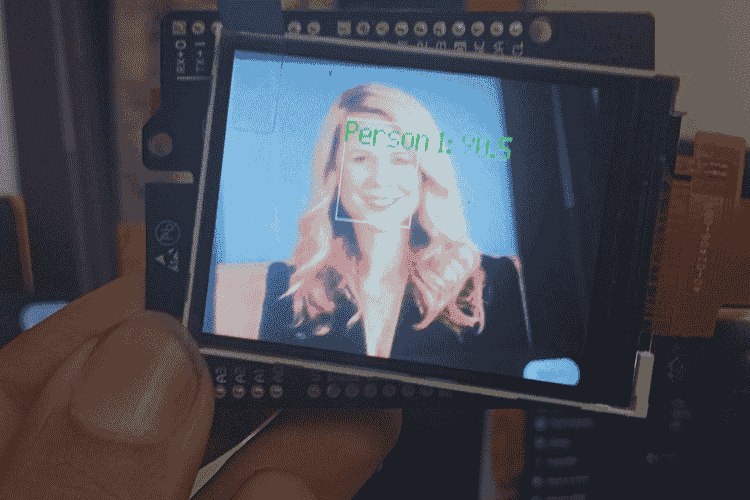
AI Model Training and Deployment : The Maixduino Kit, which includes an AI-capable microcontroller and camera, functions as the primary processing unit. It utilizes three core .smodel files trained via MaixHub.com—a model for Face(s) Detection, a model for Face Landmark Detection, and Feature Extraction. These models process and identify known faces, storing features as recognized persons (e.g., \"Person 1,\" \"Person 2\") in arrays for rapid matching. The setup allows for the simultaneous recognition of multiple faces, enabling quick identification of individuals stored in the system.
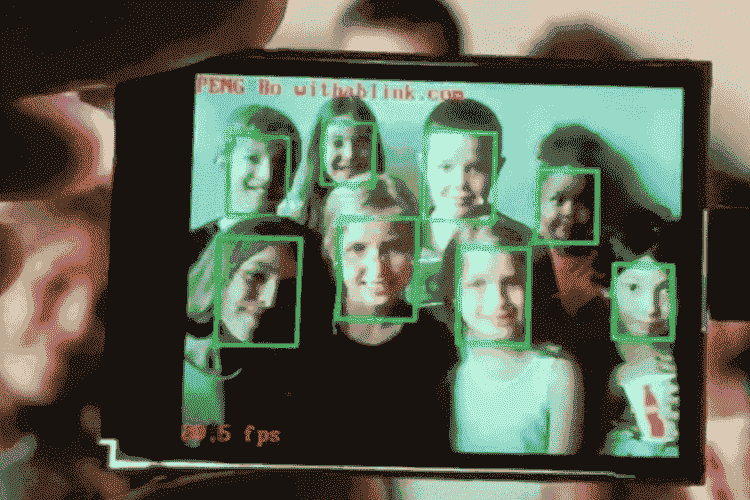
Purpose : Detects faces in the camera feed, identifying multiple faces at once.
Purpose : Detects faces in the camera feed, identifying multiple faces at once.
Model Type : YOLOv2 object detection model, optimized for real-time processing on the Maixduino’s hardware.
Model Type : YOLOv2 object detection model, optimized for real-time processing on the Maixduino’s hardware.
Outcome : Locates face bounding boxes to trigger further analysis.
Outcome : Locates face bounding boxes to trigger further analysis.
Multiple Face Detection using AI Model on Edge
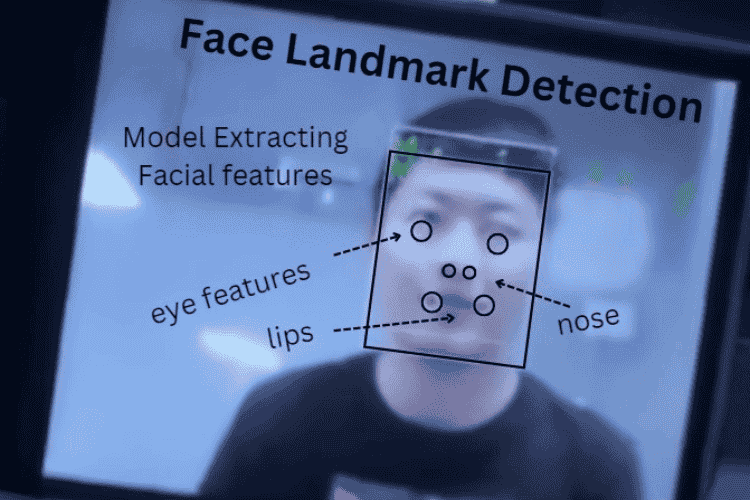
Face Landmark Detection :
Purpose : Identifies specific facial landmarks (e.g., eyes, nose, mouth) within detected faces.
Purpose : Identifies specific facial landmarks (e.g., eyes, nose, mouth) within detected faces.
Model Type : Keypoint detection model, enabling finer facial structure identification.
Model Type : Keypoint detection model, enabling finer facial structure identification.
Outcome : Provides a precise facial map, aiding in consistent feature extraction for recognition.
Outcome : Provides a precise facial map, aiding in consistent feature extraction for recognition.
Feature Extraction :
Purpose : Extracts unique facial features from detected landmarks to distinguish individual identities.
Purpose : Extracts unique facial features from detected landmarks to distinguish individual identities.
Model Type : Embedding model that outputs feature vectors for each detected face.
Model Type : Embedding model that outputs feature vectors for each detected face.
Outcome : Compares these vectors with stored profiles, recognizing known individuals and categorizing unknown ones as intruders.
Outcome : Compares these vectors with stored profiles, recognizing known individuals and categorizing unknown ones as intruders.
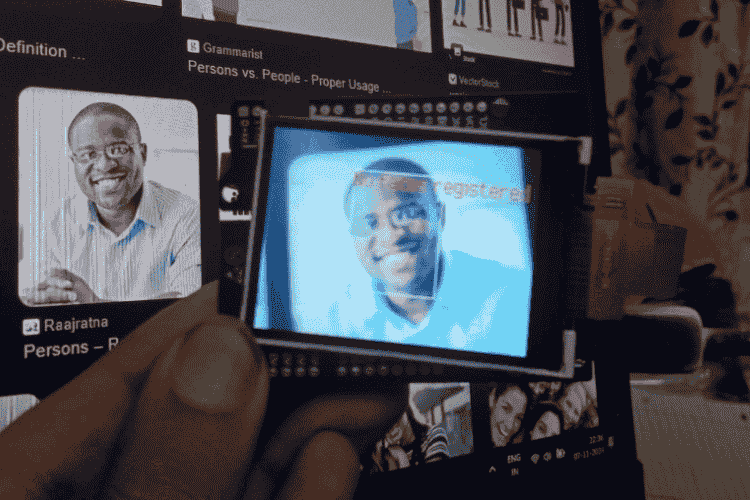
When No face is Stored in the Array, it shows that No Face Registered
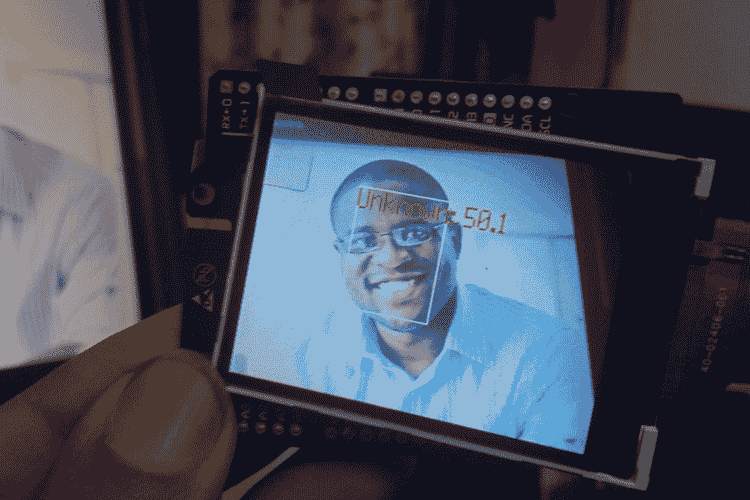
Person 1 is Stored in Array
Intruder Detection and Actuator Control : When an unrecognized person (not in the known faces array) is detected, the system categorizes them as an intruder. It triggers an immediate response, such as sounding a buzzer or activating an LED indicator. The system is also capable of relay control which also allows integration with other actuators, such as door locks, providing instant, real-time physical security.
Intruder Detection and Actuator Control : When an unrecognized person (not in the known faces array) is detected, the system categorizes them as an intruder. It triggers an immediate response, such as sounding a buzzer or activating an LED indicator. The system is also capable of relay control which also allows integration with other actuators, such as door locks, providing instant, real-time physical security.
Communication and Alerts : For reliable notifications, the system can use either Wi-Fi or GSM connectivity to send alerts, ensuring communication in areas with variable internet access. Integrating with third-party messaging apps, like Telegram. This multifaceted communication ensures that users are informed wherever they are, making the system suitable for both urban and remote applications.
Communication and Alerts : For reliable notifications, the system can use either Wi-Fi or GSM connectivity to send alerts, ensuring communication in areas with variable internet access. Integrating with third-party messaging apps, like Telegram. This multifaceted communication ensures that users are informed wherever they are, making the system suitable for both urban and remote applications.
Working via Flowchart
Everyone don't have Quectel's GSM so i came up with both WIFI and gsm approaches so that project is replicable and user friendly.
WIFI APPROACH: https://github.com/mohittalwar23/camvisiotech-edge-ai-wifi
The code is in micropython and is executed via MaixPy IDE. Here’s a breakdown of each section in boot.py and main.py :
Essential libraries ( gc, sys, etc.) and hardware-specific ones ( FPIOA, GPIO, Timer, etc.) are imported to set up system functions and control GPIOs.
Essential libraries ( gc, sys, etc.) and hardware-specific ones ( FPIOA, GPIO, Timer, etc.) are imported to set up system functions and control GPIOs.
Technologies used
Hardware components
- Raspberry Pi
- USB Camera
- Pi Camera
- Jetson Nano
Software & tools
- Python
- TensorFlow
- OpenCV
- Jupyter Notebook
- Google Colab
Project demo video
What you get
- Working project / hardware kit, tested before delivery
- Complete source code with explanation
- Project demo and guidance for your viva
- Project report, PPT and IEEE paper support (on request)
Related AI projects

ESP32 CAM Object Detection using Edge Impulse TinyML
Deploy a custom TinyML object detection model trained on Edge Impulse on ESP32-CAM to identify objects like vegetables, gestures or products...
View project
ESP32 Real-Time Face Recognition Attendance System
Build a face recognition attendance system using ESP32-CAM that automatically logs attendance with timestamp to Firebase when a registered f...
View project
C++ Programming Language
C++ Programming Language — a beginner AI project built with HTML5, CSS3, JavaScript, complete with design details, implementation steps and...
View project
How to use ESP32 Camera Module for Video Streaming and Face Recognition
In this project, we are going to build a Face Recognition System using ESP32-CAM which will also work as an ESP32-CAM Security system by rec...
View project